What Is a Proxy Server?
Both VPNs and proxies serve as intermediaries between your device and the internet, masking your real IP address and allowing you to appear as though you are browsing from a different location. However, the similarities largely end there. Understanding the fundamental differences between these technologies is essential for choosing the right tool for your privacy and security needs.
How VPNs Differ from Proxies
A proxy server acts as a gateway between you and the internet. When you connect through a proxy, your web requests are forwarded to the proxy server, which then makes the request on your behalf and returns the result. There are several types of proxies: HTTP proxies handle only web browser traffic, SOCKS proxies support various types of traffic including email and torrenting, and transparent proxies are used by organizations to filter content without user configuration. The critical limitation is that most proxies do not encrypt your traffic.
Security Comparison
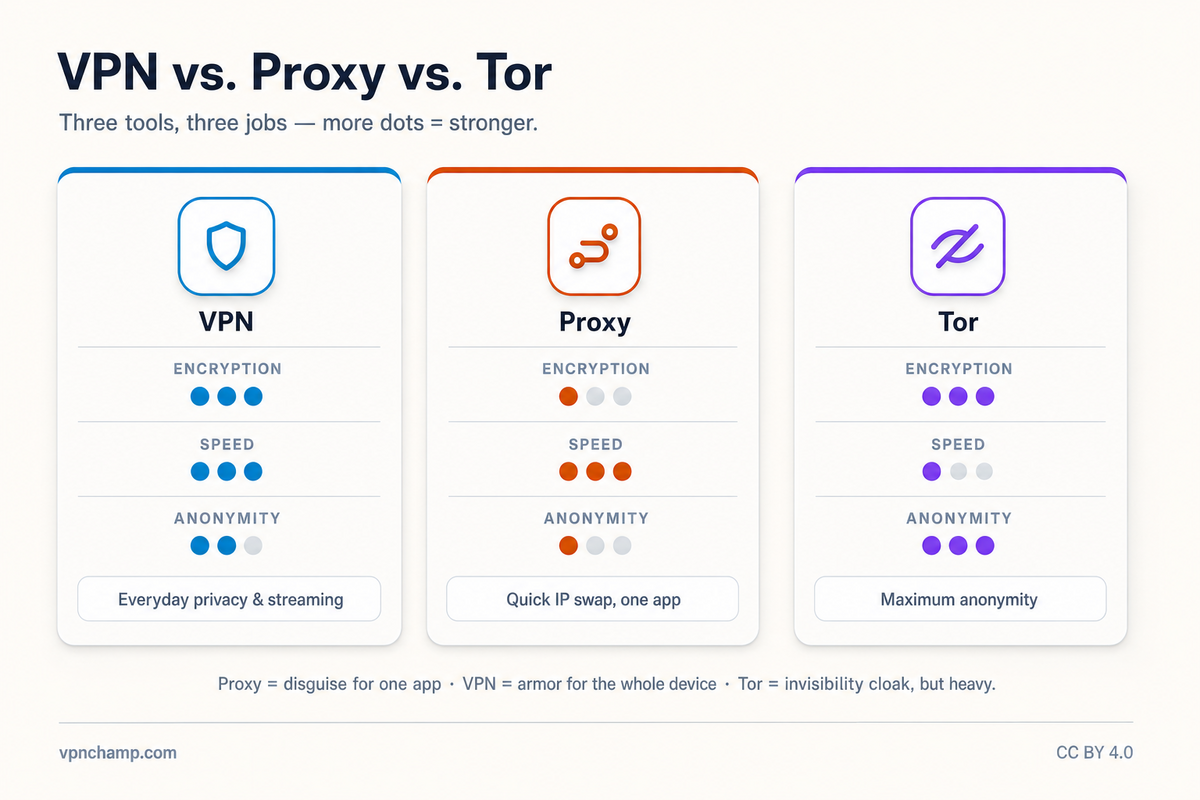
VPNs provide a comprehensive solution by encrypting all traffic from your device at the operating system level. This means every application, browser, and service on your device benefits from the protection, not just your web browser. VPN encryption uses protocols like OpenVPN, WireGuard, or IKEv2 to create a secure tunnel that shields your data from eavesdroppers, ISPs, and network administrators. Proxies typically offer no such encryption, leaving your data vulnerable to interception.
When to Use a Proxy
From a security standpoint, VPNs are significantly more robust. They protect against DNS leaks, provide kill switches for connection drops, and use military-grade encryption to safeguard your data. Proxies can change your IP address but leave your traffic readable to anyone who intercepts it. Free proxy servers are particularly risky, as some operators log user activity or inject advertisements into web pages. A VPN encrypts everything end to end, making it the clear choice for anyone concerned about security.
When to Use a VPN
Proxies have their place in certain scenarios. They are useful for quickly changing your apparent location for non-sensitive tasks, like checking localized search results or accessing a website blocked on your network. Web scraping operations often use rotating proxy pools to avoid rate limits. Proxies also tend to have lower latency than VPNs since they skip the encryption overhead, making them suitable for tasks where speed matters more than security.
For privacy, security, streaming, remote work, or any scenario where protecting your data matters, a VPN is the superior choice. Use a VPN when connecting to public Wi-Fi, accessing sensitive accounts, handling financial transactions, or any time you want comprehensive protection. The slight speed trade-off for encryption is well worth the security and privacy benefits a VPN provides over a simple proxy.